
You can ride in a straight line, you can push without wobbling, and then you watch someone pop an ollie and wonder why your board just slides out from under you. Getting skateboard tricks for beginners to click rarely comes down to bravery. It comes down to learning them in the right order, so each trick teaches one skill that the next trick needs.
Getting Your Stance, Balance, and Gear Ready Before You Try Any Trick
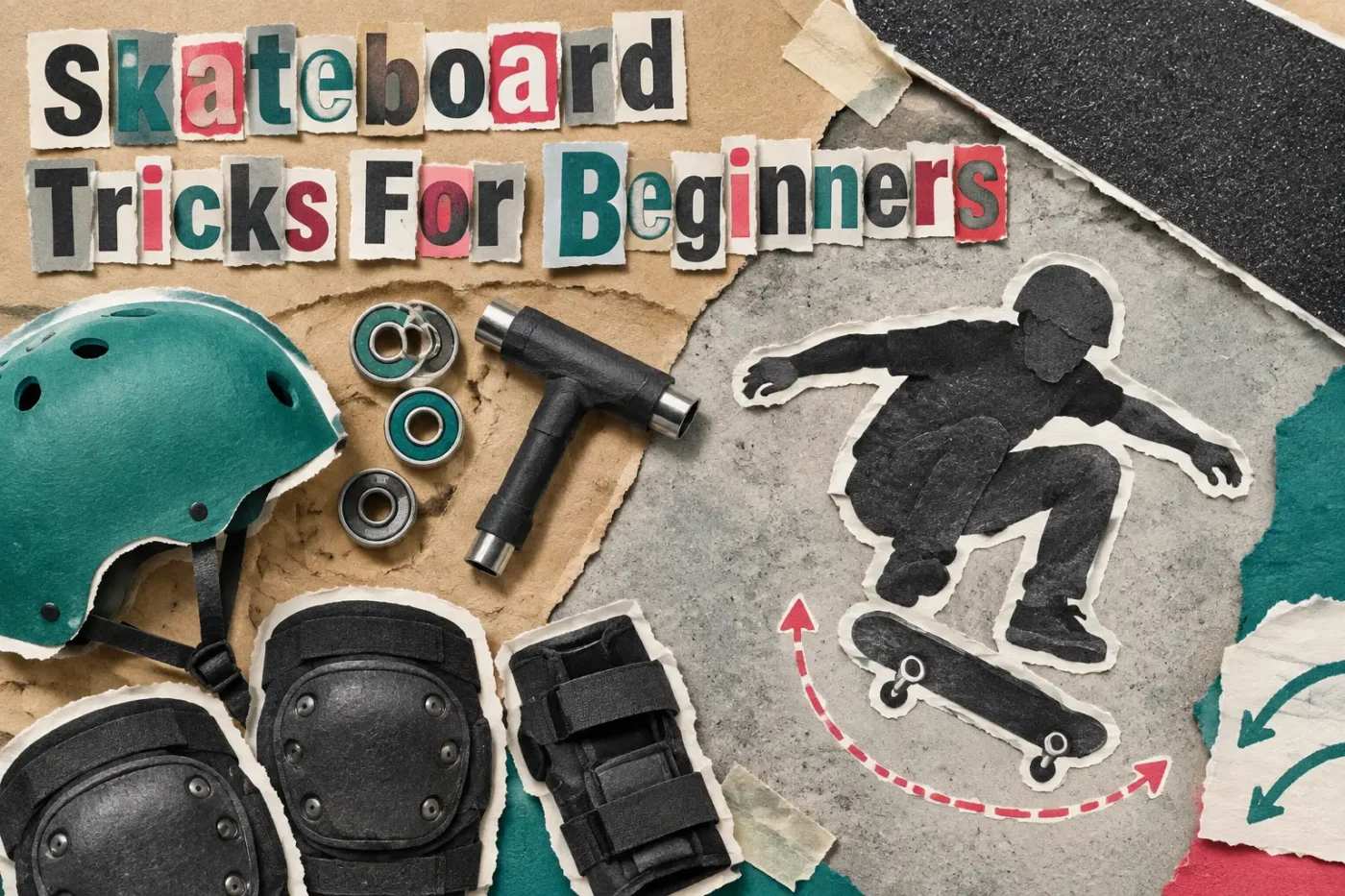
Almost every trick problem a new rider has starts before the trick does. Your feet, your board, and your protection decide how much you can learn per session. Spend ten minutes on these basics and the rest of the guide gets much easier. Many first tricks can be rehearsed with the board parked on grass or carpet, so it cannot roll away while you build the feel for each move.
How to Find Your Natural Foot Position
Most people ride with either the left foot forward (called regular) or the right foot forward (called goofy). To find yours, have a friend gently nudge you from behind, or slide across a smooth floor in socks. The foot you step out with to catch yourself is usually your front foot. Place the front foot over the front bolts, angled slightly forward, and keep the back foot on the tail, ready to press down.
Checking Your Board Setup and Safety Gear
Wiggle the trucks and make sure the nuts are snug, and spin each wheel to confirm it turns freely without rubbing. Wheels that bind or a loose truck can throw you off even on a simple roll. Wear a helmet that fits snugly, plus wrist guards, knee pads, and elbow pads while you are learning. Wrists and tailbones take the most hits from falls backward, so protect them first.
Foundation Skills Every New Rider Should Learn First
Tricks sit on top of a few quiet skills: pushing, rolling, steering, and stopping. If those feel shaky, every trick will feel harder than it is. You do not need to master them, only to feel relaxed while moving at a slow walking pace. A relaxed ride matters because tense legs make you stiff, and stiff legs cannot absorb a pop or a landing.
Pushing, Rolling, and Steering With Confidence
Push with your back foot, then bring it up onto the tail while your shoulders stay square over the board. Keep your knees soft and your eyes on where you are going, not down at your feet. Steer by leaning your weight toward your toes or heels instead of twisting the board with your feet. Practice rolling in a straight line until you can cover a long stretch without stepping off.
Stopping and Turning Safely
The simplest stop is a foot drag: lower your back foot to the ground and let it brake gently while you stay balanced on the front foot. Try it at slow speeds first, then a little faster as you get comfortable. For turning, lean through your heels or toes and let the trucks carve a gentle arc. If a stop or turn feels wild, slow down and repeat it until it feels boring. Boring is the right feeling before you add tricks.
Easy Skateboard Tricks for Beginners, Broken Down Step by Step
Instead of ranking tricks by how popular they are, it helps to order them by the single skill each one teaches: foot placement, popping, weight shift, and rolling comfort. That way every trick becomes a stepping stone to the next one. Rolling tricks like manuals and kickturns teach balance and weight shifting that carry over directly to ollies and shove-its, which is why they often work better as early practice than flip tricks. Start each one standing still, then move to rolling only when the motion feels automatic.
The Ollie, Starting With Foot Placement
The ollie is built from separate parts, and beginners improve faster by drilling each part alone before combining them. Put the board on grass or carpet and set your feet first. Your back foot should sit with the ball of the foot on the tail, and your front foot should sit behind the front bolts with toes pointing slightly forward. Make sure no toes hang off the edge, since a back foot planted on the wrong part of the tail will make nearly every trick feel impossible. Next, practice the pop by snapping the tail down against the ground, then add the front foot sliding up the grip tape to level the board. Finally, draw your knees up as you slide. Only after each part feels natural should you try them as one motion, first stationary, then rolling slowly.
Manual and Kickturn Basics
A manual is a balance on the back wheels. Standing still on carpet, shift your weight back until the front wheels lift slightly, then find the point where the board feels light without tipping. Keep your arms out and your knees loose, and hold the lift for a second or two before setting it down. A kickturn is similar: press the tail down, lift the front wheels, and pivot your shoulders in the direction you want to turn. Both tricks teach you where your balance point lives, and that sense of weight is exactly what an ollie needs to land cleanly over the bolts.
Common Mistakes That Slow Beginners Down and How to Fix Them
Most stalls in progress come from a handful of habits, and almost all of them are fixable in a single session. The most common is poor foot placement, with toes hanging off the edge or the back foot too far from the end of the tail. Fix it by setting your feet on grass before every attempt and checking them by eye. Another common mistake is leaning back during the pop, which sends the board forward and you backward. Keep your shoulders over your front knee and think about jumping straight up. A third is skipping the stationary stage and going straight to rolling, which adds speed to a motion you have not yet built. Go back to carpet whenever a trick stops working. The last habit is looking down at your feet, which pulls your weight forward and makes you wobble. Look at a point ahead of you and trust your feet to find the board.
Building a Practice Routine That Helps You Progress Safely
Short, focused sessions beat long, tired ones. Pick one trick, spend a few minutes on the stationary version, then try it at a slow roll. Stop when your attempts get sloppy, because tired legs lead to falls. Knowing when you are truly ready to move on is simple: you can repeat the step several times in a row without thinking about where your feet are. Until then, stay on the same step.
Choosing a Good Practice Spot
Look for a smooth, flat surface with no cracks, gravel, or slopes, and plenty of room around you. Quiet parking areas and empty courts work well, as long as you are allowed to use them. Start on grass or carpet for the standing-still drills, then move to pavement for rolling work. Avoid crowded spots where you might feel rushed or distracted.
Setting Small Goals and Tracking Your Progress
Break each trick into a checklist, such as foot placement, pop, slide, and landing, and tick off one item per session. Write down what clicked and what did not, or record a short video on your phone to see your own feet. Watching yourself shows problems you cannot feel, like a back foot sitting too low on the tail. Progress is slow and uneven, and that is normal.
Related guides
- Skateboard Parts Explained: Deck, Trucks, Wheels, Bearings
- Longboarding for Beginners: Choose a Board, Gear Up and Ride
- Skateboarding for Beginners: Gear, Balance, Stops and Ollies
Frequently Asked Questions
What is the easiest skateboard trick to learn first?
The kickturn is usually the easiest first trick. It only asks you to press the tail down, lift the front wheels a little, and pivot, so there is no jump and no flipping board to worry about. It also teaches the weight shift you will need for an ollie. A basic manual practiced standing still on carpet is a close second.
How long does it take a beginner to learn an ollie?
There is no fixed timeline, because it depends on how often you practice and how solid your foot placement is. Many riders need weeks of regular, short sessions before the board leaves the ground cleanly and lands under control. Drilling the pop, the slide, and the knee lift as separate parts usually shortens the wait.
Should beginners learn to ride switch or fakie before trying flip tricks?
Riding fakie (rolling backward in your normal stance) is worth learning early, because it builds comfort with balance and turning in both directions. Riding switch (with your opposite foot forward) can wait until your regular stance feels automatic. Flip tricks are best saved until your ollie is steady, since they add rotation on top of a pop you already need to control.
What protective gear should a beginner wear while learning tricks?
Start with a snug helmet, wrist guards, knee pads, and elbow pads. Wrists and knees take the most hits when learning, so pads there make a real difference. Flat, grippy shoes also help your feet stay planted on the grip tape during drills.
Conclusion
Skateboard tricks for beginners work best when they are learned in order: set your feet, build balance with manuals and kickturns, then add the ollie one part at a time. Practice each move standing still on grass or carpet before you roll, and move on only when the step feels automatic. Keep sessions short, wear your protection, and check your foot placement before every attempt.
Take each step slowly and your first tricks will arrive sooner than you expect.