
Most beginners don’t quit skateboarding because it’s too hard. They quit because they bought the wrong board, skipped learning to fall, and spent three weekends wobbling in a parking lot trying an ollie before they could comfortably push and turn. This guide to skateboarding for beginners treats your first month as a sequence of small skills, each with a quick check so you know when to move on.
What You Need Before Your First Ride
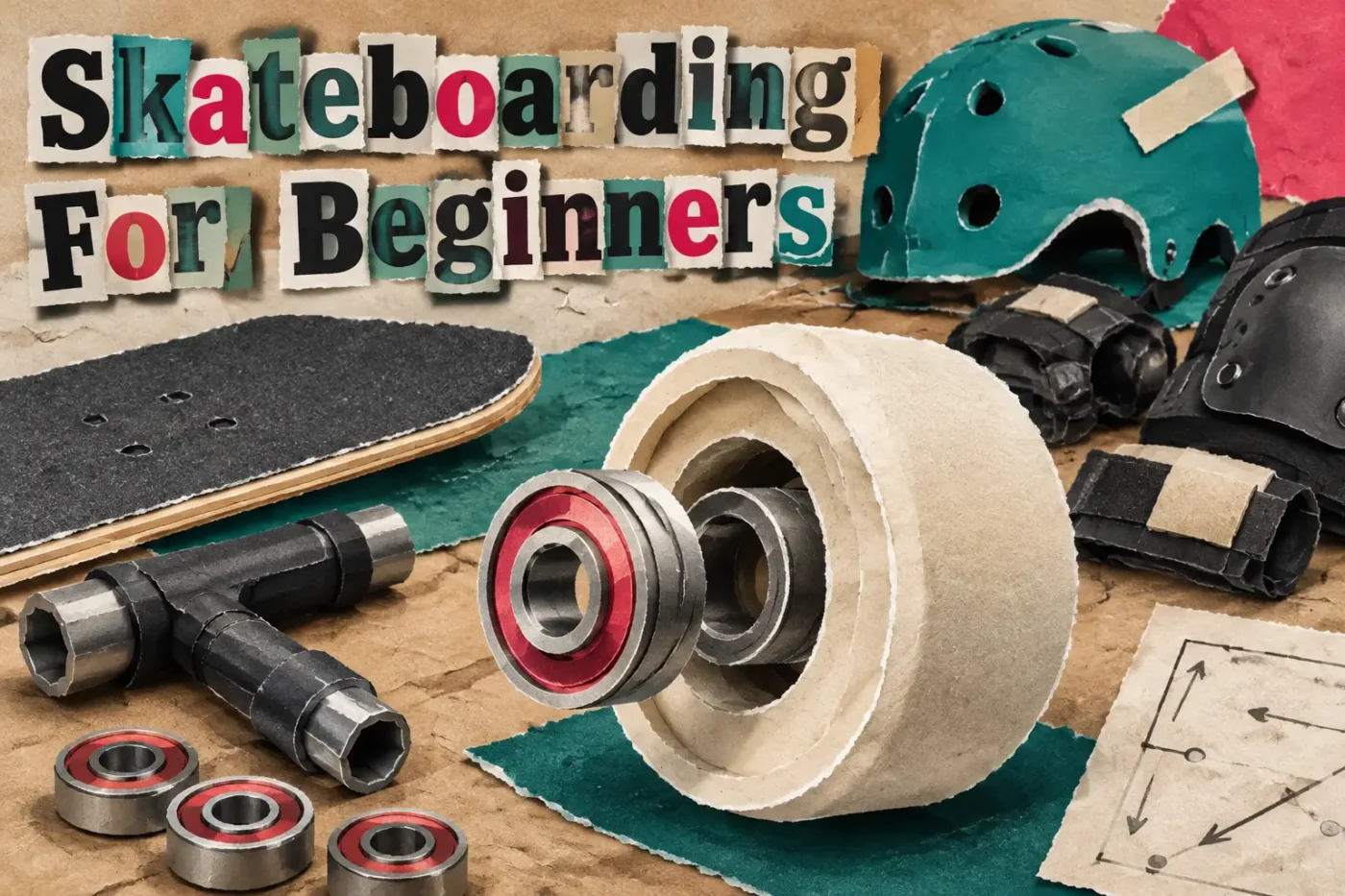
You need very little to start: a properly sized complete skateboard, a helmet, wrist guards and a pair of flat-soled shoes. Getting these right matters more than anything else you do in week one, because bad gear makes every later skill harder. Spend your first session on flat, smooth ground with no traffic and no slopes. Ready to move on when: you can stand on the board with both feet while it sits on grass or carpet and it feels stable.
Choosing a Complete Skateboard That Fits Your Style
A complete skateboard is made of a deck, trucks, wheels, bearings and grip tape. Beginners are usually better off buying a pre-assembled complete from a skate shop than a cheap toy-store board, because the trucks and bearings on those are often poor quality and make turning and rolling harder. Pick a deck wide enough that your feet fit comfortably across it, and be aware that a wider deck feels steadier while a narrower one feels more nimble. If you mainly want to cruise and get around, a slightly larger, softer-wheeled setup is more forgiving than a tiny trick-focused one.
Protective Gear and Footwear Basics
Wear a helmet and wrist guards from your very first push, and add knee and elbow pads if you want extra protection while you learn. Wrist and head injuries are the most common beginner problems, and this gear targets exactly those. Choose shoes with flat, grippy soles and snug laces, since loose or chunky shoes slip off the board. Skip sandals and slippery casual shoes entirely.
How to Stand, Balance and Push Off Safely
Before you roll anywhere, practice standing on the board on carpet or grass so it can’t move. Bend your knees slightly, keep your shoulders relaxed and look ahead rather than at your feet. Once that feels natural, move to a flat, smooth surface. Ready to move on when: you can step on, roll a short distance and step off without losing your balance.
Finding Your Natural Stance
Your stance is either regular (left foot forward) or goofy (right foot forward), and neither is better. A simple way to find yours is to notice which foot you instinctively step forward with, or have a friend gently nudge you from behind and see which foot catches you. Try rolling a little in both stances and keep the one that feels more stable. Don’t overthink it: if you change your mind after a week, switching is fine.
Pushing, Rolling and Foot Placement
Place your front foot over the front bolts, angled slightly forward, and push with your back foot while your front foot stays put. This is the standard way to start moving. “Mongo” pushing, which means using the front foot to push, is common among newcomers, but switching to the standard method early builds better balance and control. After a push or two, place your back foot over the tail, keep your knees soft and let the board roll. Ready to move on when: you can push three or four times in a row, ride in a straight line and stop by stepping off.
Turning, Stopping and Controlling Your Speed
Steering and stopping are what make skateboarding feel safe, so give them real practice time before trying anything flashy. Work in an empty, flat area where you can ride in wide loops without worrying about obstacles. Keep your speed low until both skills feel automatic. Ready to move on when: you can ride a gentle S-shape and come to a controlled stop at a spot you picked in advance.
Carving and Leaning to Steer
Skateboards steer by tilting, not by twisting the board with your feet. Shift your weight slightly toward your toes or heels and the trucks pivot, carving the board in that direction. Start with very small leans and widen them as you get comfortable. Keep your knees bent and your eyes pointed where you want to go, since your body tends to follow your head.
Foot Braking and Other Beginner Stops
For a foot brake, shift your weight onto your front foot and drag the sole of your back shoe lightly along the ground until you slow down. Practice at walking pace first so you learn the feel before adding speed. If you’re rolling too fast, step off the board forward and keep running a few steps rather than trying to stay on. Dragging your foot wears down shoe soles over time, which is normal.
Your First Tricks in a Logical Order
Tricks come after you can push, turn and stop comfortably, not before. A sensible order is to start with skills that teach you how to shift weight and move the board, then build toward the ollie. Practice each trick while standing still or rolling very slowly, so mistakes stay small. Ready to move on when: you can do each trick several times in a row without stepping off to catch your balance.
Manual and Kickturn Basics
A kickturn means pressing down on the tail so the front wheels lift, then pivoting the board to change direction. Start by doing it standing still, then at slow rolling speed. A manual is balancing on the back wheels only, so practice rolling slowly with your weight shifted over the back foot and your front wheels just off the ground. Both skills teach you where the balance point of your board is, which you’ll rely on for the ollie.
Learning the Ollie Step by Step
Break the ollie into parts instead of trying it all at once. First, practice the pop: stand still with your back foot on the tail and snap it down so the nose lifts. Next, add the slide, dragging your front foot up the board to level it out. Finally, put the two together while rolling very slowly, and expect it to take many sessions before the board follows you cleanly into the air. Keep your shoulders square and your knees bent on landing.
Building Confidence, Avoiding Injuries and Practicing Well
Progress comes from short, regular sessions rather than one exhausting weekend. Stop when you feel tired, because sloppy tired attempts cause most avoidable falls. Keep your gear on every time, even when you’re only rolling around. Learning to fall comes before learning tricks, so spend time on that before you chase anything harder.
Falling Safely and Common Beginner Mistakes
Crouch low when you feel you’re losing the board, because a shorter drop hurts less. Roll out of a fall rather than reaching out with stiff arms, which is how wrists get hurt, and let the guards and your body’s rolling motion absorb the impact. The most common mistakes are looking down at your feet, standing too upright, bailing out stiffly and trying an ollie before you can steer. If you can fall without panic, you’ll be braver and learn faster.
Simple Practice Routines and Where to Ride
Keep each session short and focused on one skill. A simple routine is to warm up with a few minutes of pushing and rolling, spend most of your time on the single skill you’re working on, then finish with a few easy runs while you’re still fresh. Ride on smooth, flat, quiet ground at first, such as an empty paved area or a beginner-friendly section of a public skate park, and avoid traffic, hills and rough surfaces until your steering and stopping are reliable. Skate parks are busy places, so watch the flow of other riders before you roll in, and pick quiet times when you can. Ready to move on when: you can ride a short loop, turn both ways and stop on purpose without thinking about it.
Related guides
- Skateboard Tricks for Beginners: Ollie, Manual and Kickturn
- Skateboard Parts Explained: Deck, Trucks, Wheels, Bearings
- Longboarding for Beginners: Choose a Board, Gear Up and Ride
Frequently Asked Questions
What do I need to start skateboarding as a beginner?
You need a properly sized complete skateboard from a skate shop, a helmet, wrist guards and flat-soled shoes. Knee and elbow pads are a useful extra while you’re learning. A smooth, flat, traffic-free place to practice is just as important as the gear.
How do I find out if I’m regular or goofy?
Notice which foot you instinctively step forward with, or have a friend gently nudge you from behind and see which foot catches you. Regular means left foot forward and goofy means right foot forward. Try rolling a little in both stances and keep whichever feels steadier.
How long does it take to learn to skateboard?
It varies from person to person, so any fixed timeline would be a guess. Most beginners can push, roll and make gentle turns within their first few sessions, while comfortable stopping and early tricks take longer. Short, regular practice usually beats occasional long sessions.
Is skateboarding hard to learn as an adult?
It can feel slower at first, since adults tend to be more cautious about falling. That caution can actually help, because it pushes you to wear protective gear and build the basics before tricks. Learn to fall, take it one skill at a time and you can progress at a perfectly good pace.
Conclusion
Skateboarding for beginners works best as a sequence of small skills: a proper complete board, a comfortable stance, solid pushing, steering and stopping, and learning to fall before trying tricks. Each stage has a simple check, so you move on when you’re ready rather than when you’re impatient. Keep your protective gear on and your sessions short, and the basics will carry you into the fun parts of the sport.
Take your time on the early steps, and the tricks will come much more easily.