
You can nail every trick in your head and still lose the first time your wheels hit a pebble and your wrists take the whole fall. Skateboard safety gear isn’t about looking cautious; it’s about matching the right protection to the exact way you’re most likely to hit the ground.
Why Protective Gear Matters Every Time You Step on a Board
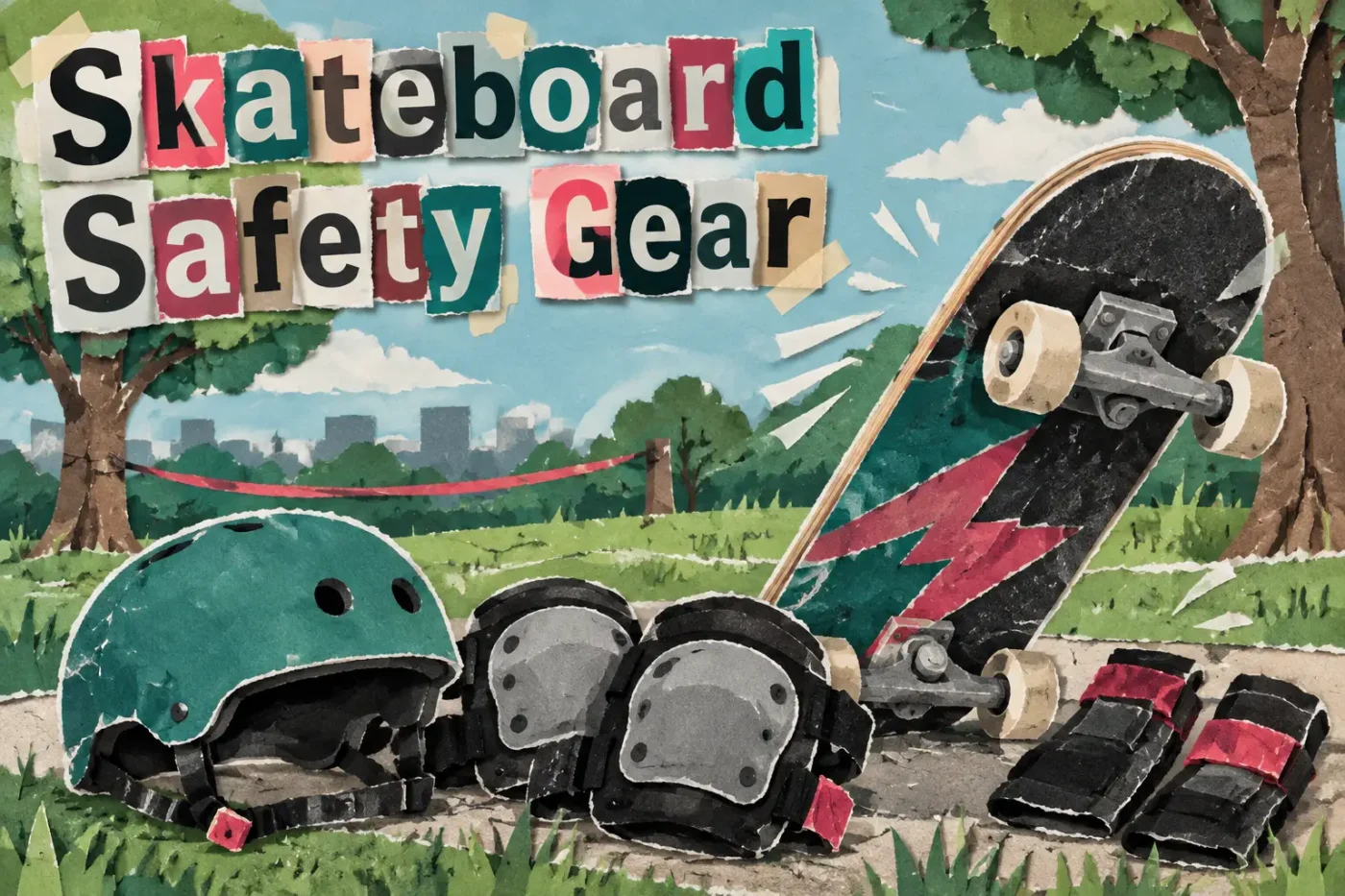
A skateboard is small, fast, and unforgiving of surprises. A crack in the pavement, a loose pebble, or a wheel that bites at the wrong moment can stop the board while your body keeps moving. Most falls come down to three directions: forward, backward, and sideways. Each one loads a different part of your body, so each one calls for a different piece of skateboard safety gear. Think of your kit as a map: forward falls send you onto your hands, backward falls put your tailbone and head at risk, and sideways falls land on the hip and elbow.
The Most Common Injuries Beginners Face
The classic beginner fall is the forward slide onto outstretched hands, which is how wrists get sprained or broken. The second is the backward slam, where your feet shoot out and you land on your tailbone, sometimes snapping your head back toward the ground. Sideways falls bruise or scrape the hip and elbow, and sliding falls rip skin off knees and palms. Wrist, tailbone, head, hip, elbow, and knee: those are the spots your gear needs to cover.
How Protection Builds Confidence While You Learn
When you know a fall won’t wreck your wrists, you stop tensing up and start committing to new moves. Riders who fear every fall tend to stiffen, and stiff bodies fall harder. Padding lets you practice the same trick repeatedly, which is how skills actually build.
Choosing a Helmet That Fits and Protects Properly
The helmet is the one piece of gear that guards something you can’t repair. It handles the backward and sideways falls where your head can hit the ground hard. Two things decide how well it works: whether it carries the right type of certification for skating, and whether it fits your head without moving around. A good helmet that sits crooked or rocks side to side protects far less than an average one that fits well.
Certified Skate Helmets Versus Cycling Helmets
Helmets used for skating are commonly sold under two certification styles. Multi-impact skate-style helmets are rated for repeated smaller hits, which suits a sport where you fall often. Single-impact bike-style helmets are designed for one serious crash and then retirement. A skate helmet also usually sits lower on the back of the head, which matters because backward falls are so common. Check the label inside the helmet to see which standard it meets before you buy.
How to Size and Adjust a Helmet Correctly
Measure around your head just above the eyebrows and ears, then match that to the maker’s size chart. Put the helmet on level, with the front edge about two fingers above your eyebrows, not tipped back on your forehead. Tighten the chin strap until it’s snug, with room for one finger under it. Shake your head side to side and nod: the helmet should move with your head, not rock on top of it.
Wrist Guards, Knee Pads and Elbow Pads for Common Falls
Once your head is covered, pads handle the falls that happen most often. Each pad answers one specific fall: wrist guards for forward falls, knee pads for kneeling and sliding falls, and elbow pads for sideways hits. Fit matters as much as the pad itself. Pads that slip down or shift off the joint during a fall lose most of their protective value, so they should feel snug but not cut off circulation.
Why Wrist Protection Comes First
Your hands are the first thing to reach the ground in a forward fall, which is why wrist guards are widely considered the highest-value pad for new riders. They have a rigid splint on the palm side that stops the wrist from bending backward on impact. That bend is what causes many wrist injuries. If you buy only one pad before your first session, make it this one.
Matching Pad Fit and Coverage to Your Riding Style
Knee and elbow pads come in two main styles. Hard-cap pads have an outer shell that skids over pavement, which suits fast riding and slides. Soft-sleeve pads are lighter and more flexible but give less scrape protection, so they fit casual cruising better. Here is a quick way to choose:
- Cruising: helmet and wrist guards are the core; soft-sleeve knee and elbow pads are a good extra.
- Park sessions: helmet, wrist guards, and knee pads are the core; elbow pads help with sideways falls on hard surfaces.
- Downhill or bowl riding: helmet, wrist guards, hard-cap knee and elbow pads are all worth wearing.
Extra Protection for Longboarding, Downhill Speeds and Trick Practice
Everything above is the base kit. Once speed goes up or you start practicing harder tricks, a few extras start to earn their place. They are not required for a slow roll around the block, but they make sense when a fall would be faster, longer, or more likely to slide along the ground.
Slide Gloves and Hand Protection for Longboarders
Slide gloves have hard pucks on the palms that let you drop a hand to the pavement to scrub speed or steady a slide. They also protect your palms from road rash when you fall at speed. Wear them together with wrist guards, not instead of them, since gloves alone don’t brace the wrist against bending backward.
Padded Shorts and Other Optional Upgrades
Padded shorts cushion the hips and tailbone, which helps with backward and sideways falls on hard ground. They are nice to have for park and trick sessions where you land on your hip often. Long sleeves and sturdy trousers are another easy upgrade for downhill riding, since they add a layer between your skin and the road.
Caring for Your Gear and Knowing When to Replace It
Protective gear only works if it’s in good shape. Sweat, sun, and repeated knocks wear it down, and worn gear can look fine while protecting less than it should. A few minutes of care after each session keeps pads and helmets doing their job for longer.
Cleaning, Drying and Storing Pads and Helmets
Wipe the helmet shell and inner padding with a damp cloth and mild soap, then air-dry it away from direct heat. Remove pad inserts if they come out, wash the sleeves by hand, and let everything dry fully before packing it away. Store gear in a cool, dry spot out of strong sunlight, which can weaken plastic and foam over time. Avoid leaving it in a hot car.
Warning Signs That Gear Has Reached the End of Its Life
Replace a helmet after any hard impact, even if you can’t see damage, and replace it if the foam is cracked, dented, or crumbling. Look for cracked caps, torn straps, broken buckles, and splints that have bent or come loose in wrist guards. Pads that no longer stay in place, or whose foam has gone flat and stiff, should be swapped out too.
Conclusion
Protection works best when it matches the fall: a helmet for your head, wrist guards for forward falls, and knee and elbow pads for slides and sideways hits. Add slide gloves or padded shorts as your speed and tricks demand, and keep every piece fitted snugly and replaced when it wears out.
Start with a helmet and wrist guards, then build the rest of your kit as your riding changes.